Made to your roof, not a catalog
Coping, caps, and panels are brake- and roll-formed to your exact dimensions — so a piece can follow a hip, valley, or radius instead of being forced to fit a stock length.
Standing-seam panels, copper coping, chimney caps, and custom flashing — brake-formed, roll-formed, and soldered in our own shop to the exact dimensions of your roof, by a local licensed crew.
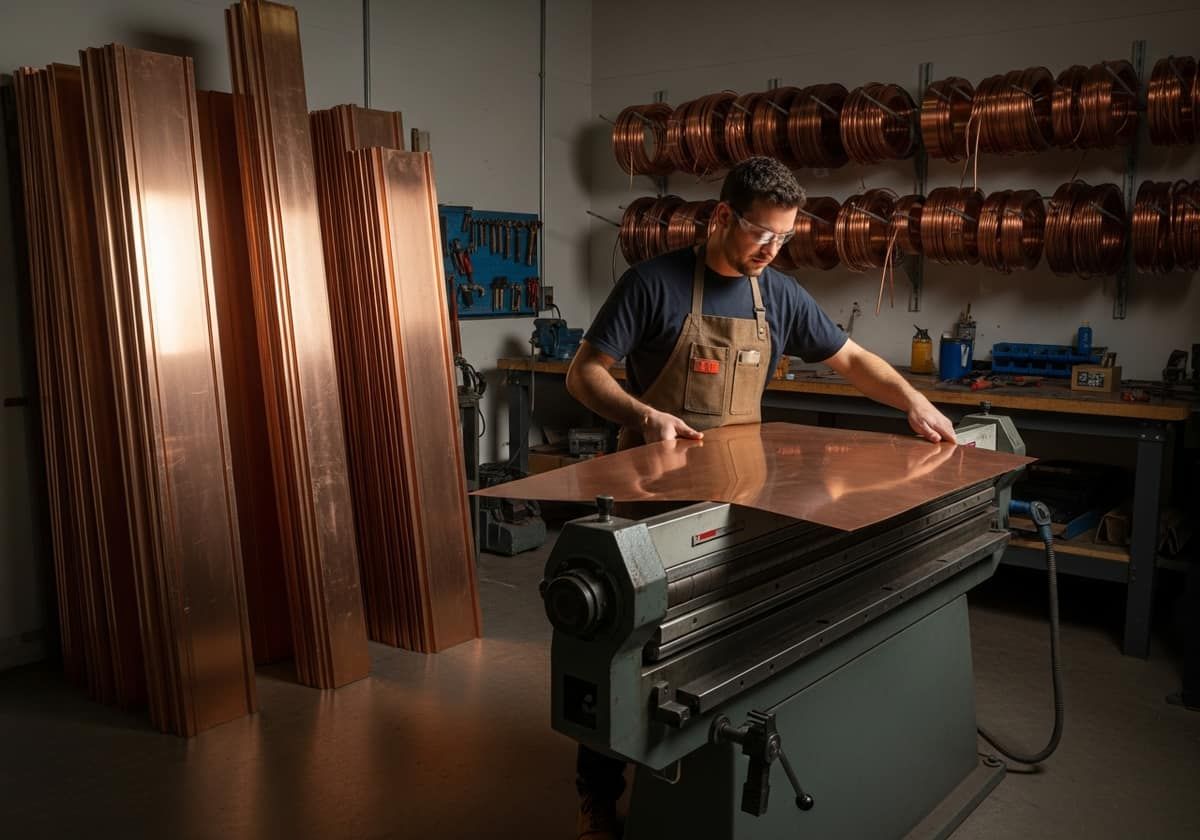
Custom roof and metal fabrication is where a roof stops being a box of parts and becomes one watertight system. Most of what fails on a metal or tile roof is not the field of the roof at all — it is the metal that ties it together: the coping that caps a parapet, the flashing at a wall or chimney, the standing-seam pans, the gutters and conductor heads. We fabricate those pieces in our own in-house sheet-metal shop, formed and soldered to the exact dimensions of your roof rather than pulled off a distributor’s shelf.
We are a local, licensed roofing contractor, and the reason we keep fabrication in-house is control. When the same shop that runs your standing-seam panels also brakes the coping and solders the flashing, the metal, gauge, profile, and joints all match — and one crew is accountable for every seam. That control is also what lets us match historic copper and coping in kind for the Town of Palm Beach’s ARCOM and Landmarks estates, where an off-the-shelf substitute would never pass review.
Drag the handle. On the left, the off-the-shelf flashing and bead of sealant most crews leave behind — the joint that fails first. On the right, the same detail fabricated and soldered to fit, the way a roof is meant to last.
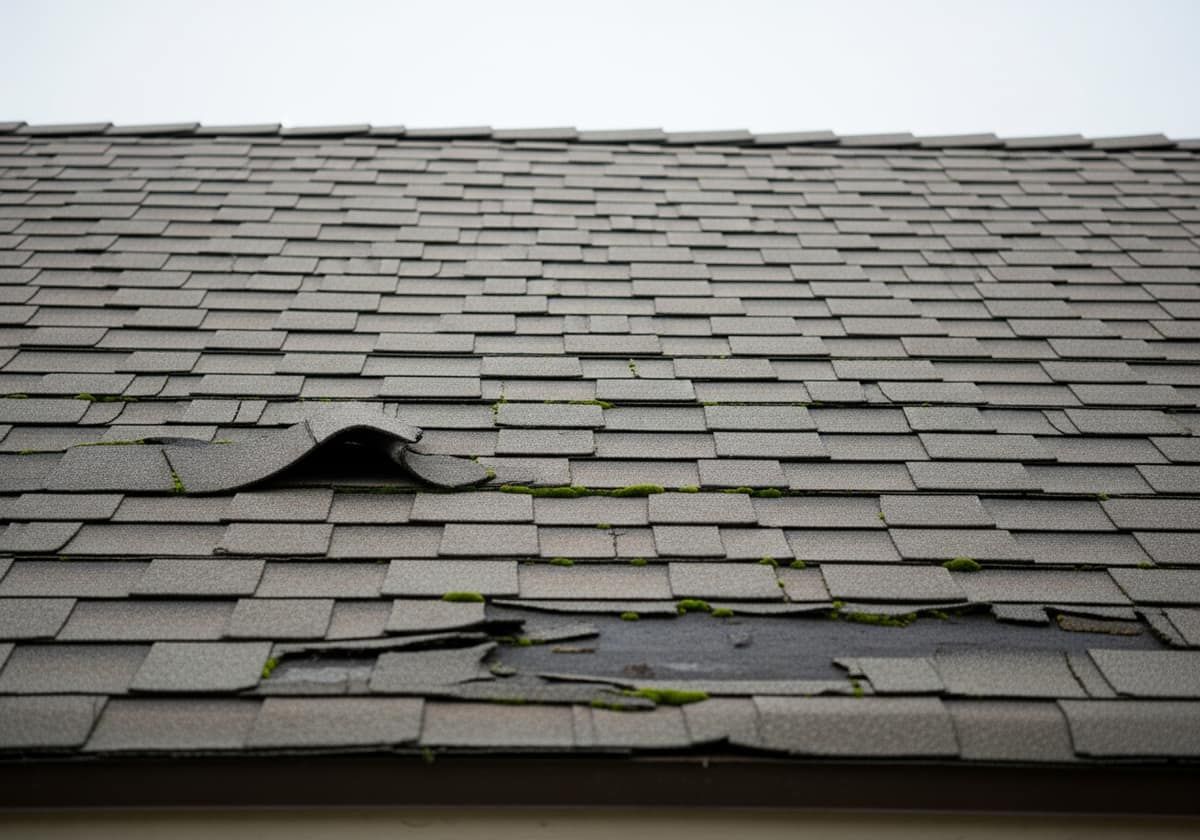
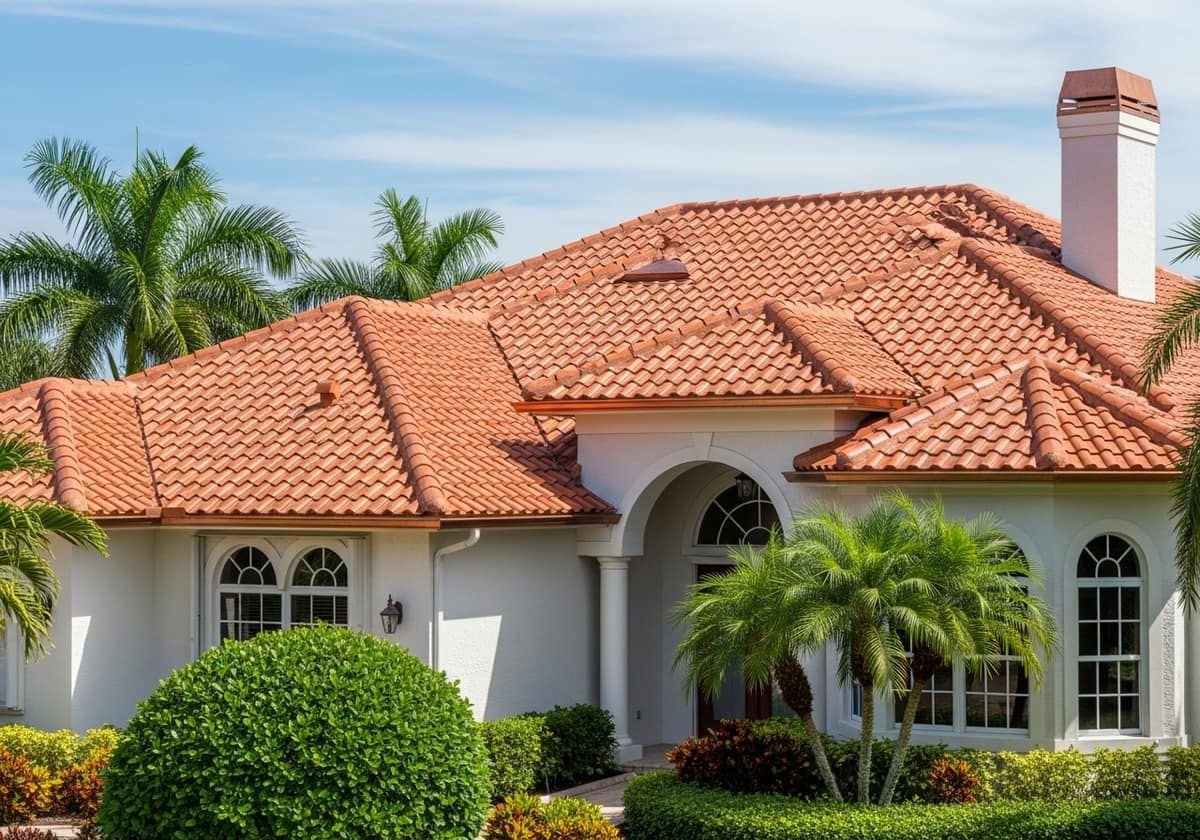
Anyone can install metal that arrives pre-cut. Forming it ourselves is what lets us solve the details that decide whether a roof leaks.
Coping, caps, and panels are brake- and roll-formed to your exact dimensions — so a piece can follow a hip, valley, or radius instead of being forced to fit a stock length.
Copper and zinc laps are soldered, not just caulked. A bead of sealant has a shelf life; a soldered seam becomes one continuous piece of metal that doesn’t.
Copper, zinc, and standing-seam steel measure their lifespans in generations, not the 15–20 years a shingle roof gives you in the Florida sun.
On the island, we match historic copper, coping, and dormer profiles in kind and carry the work through the Town’s review — something stock parts can’t do.
The same hands that form the metal install it. No finger-pointing between a fabricator and a roofer when a detail has to be right.
When a one-off flashing or chimney cap is the difference between a dry attic and a callback, we can fabricate it the same week instead of waiting on a special order.
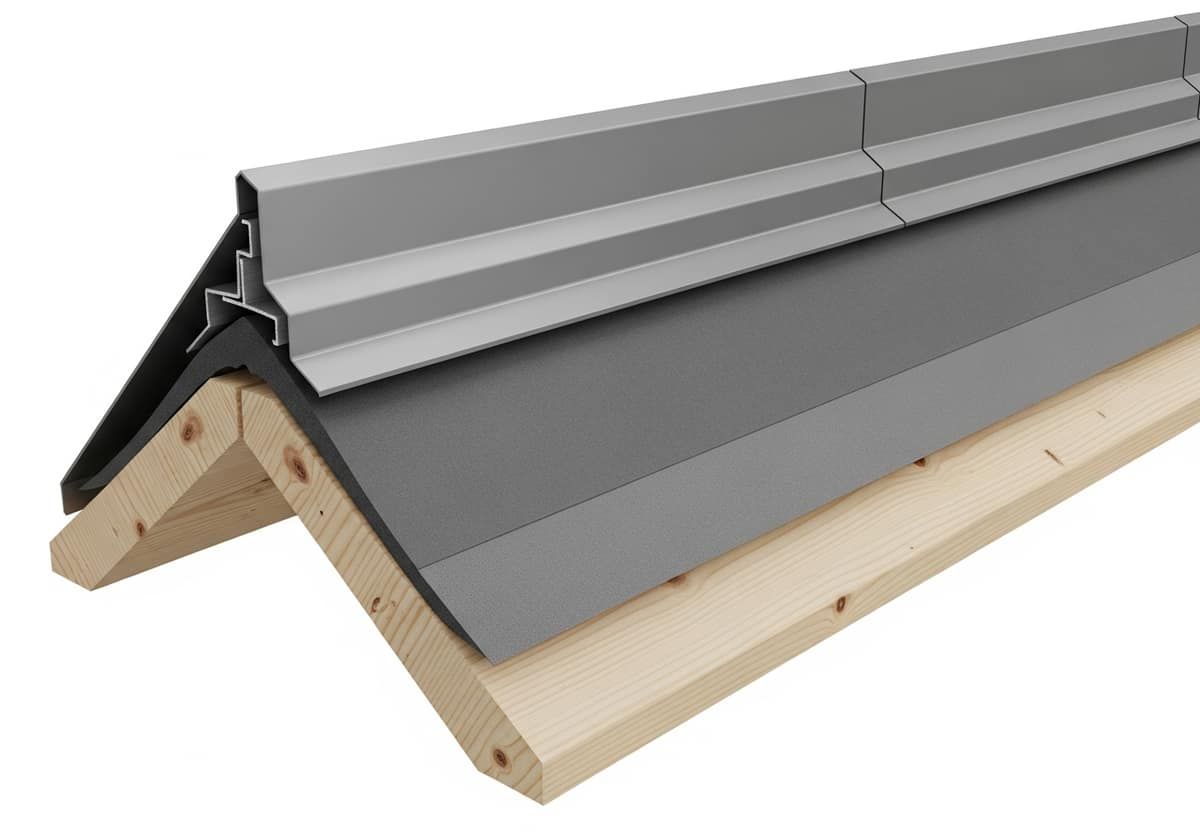
The field of a roof rarely fails. The metal that joins it to walls, chimneys, and edges does. These are the fabricated details that keep the water out.
A fabricated detail is only as good as the measurement behind it. Here is the path a Palm Beach County project actually follows.
We measure every run and angle on the roof and, for anything irregular, make a physical template — so the metal we form matches the building, not a drawing of it.
We lay out each piece and pick the metal and gauge for the job — copper or zinc for longevity and the island estates, aluminum or coated steel where budget and coastal corrosion lead.
Flat stock and coil become finished profiles on the brake and the roll-former: coping, cap flashing, counterflashing, and standing-seam pans cut and bent to length.
Copper and zinc laps are soldered into continuous, watertight joints, and panel seams are mechanically locked — the steps that decide whether a detail lasts decades.
Edges are dressed, finishes and color coatings checked, and copper is either left to weather naturally or given a head start on its protective patina.
The same crew sets and fastens the metal on the roof — cleats, laps, and terminations installed so wind, uplift, and water all work the way the detail was designed to.
We pull the permit and meet the inspector, and on the island we carry the metalwork through the Town of Palm Beach’s ARCOM and Landmarks review so it passes the first time.
Have a one-off flashing, coping, or chimney-cap problem? We can fabricate it.
Get a Free EstimateIf it’s formed from sheet metal and lives on a roof, our shop makes it — matched to your roof and to the look your home calls for.
Roll-formed to length, seamed into continuous runs with no exposed fasteners. More →
Formed caps locked over continuous cleats to weatherproof parapets, walls, and edges.
Custom caps, crowns, and saddle crickets that shed water around the toughest penetration on the roof.
Headwall, sidewall, valley, and reglet-set counterflashing bent to the exact detail it serves.
Half-round copper gutters, downspouts, and decorative conductor heads, soldered watertight. More →
Bay roofs, dormer pans, cupolas, and one-off architectural metal — matched in kind for historic estates.
Fabrication is quoted by the metal, gauge, finish, profile complexity, and linear footage involved, so we measure and price on-site rather than over the phone. Tell us what your roof needs and we’ll spell out the metal and the number in a clear written estimate.
The metal and gauge you choose drive both the look and the lifespan — and, on the island, what ARCOM and Landmarks will approve. Here is how the options compare so you know exactly what you’re buying.
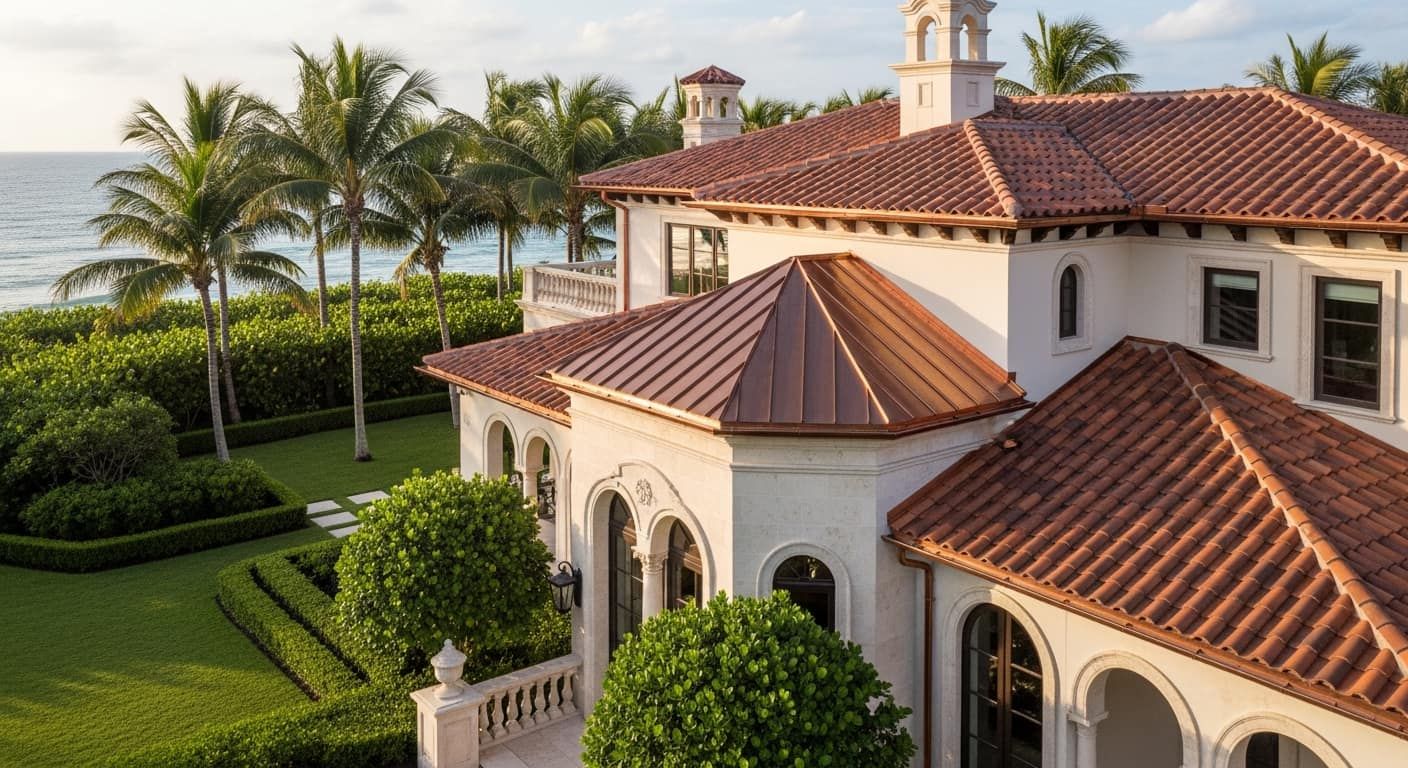
A soldered copper bay, a clean standing-seam run, coping that wind never lifts — the details a fabricator sweats are the ones that make a roof look right and stay dry for decades. That is what an in-house shop is for.
A local team member follows up to answer your questions and walk you through your options, pricing, and any financing. No pressure, no call center.