Copper roofing, the island standard.
Soldered standing-seam and flat-seam copper for the homes that demand it — from oceanfront estates on the Town of Palm Beach to coastal Palm Beach County. Copper earns a living patina, shrugs off the salt air, and outlasts every other roof on the street.
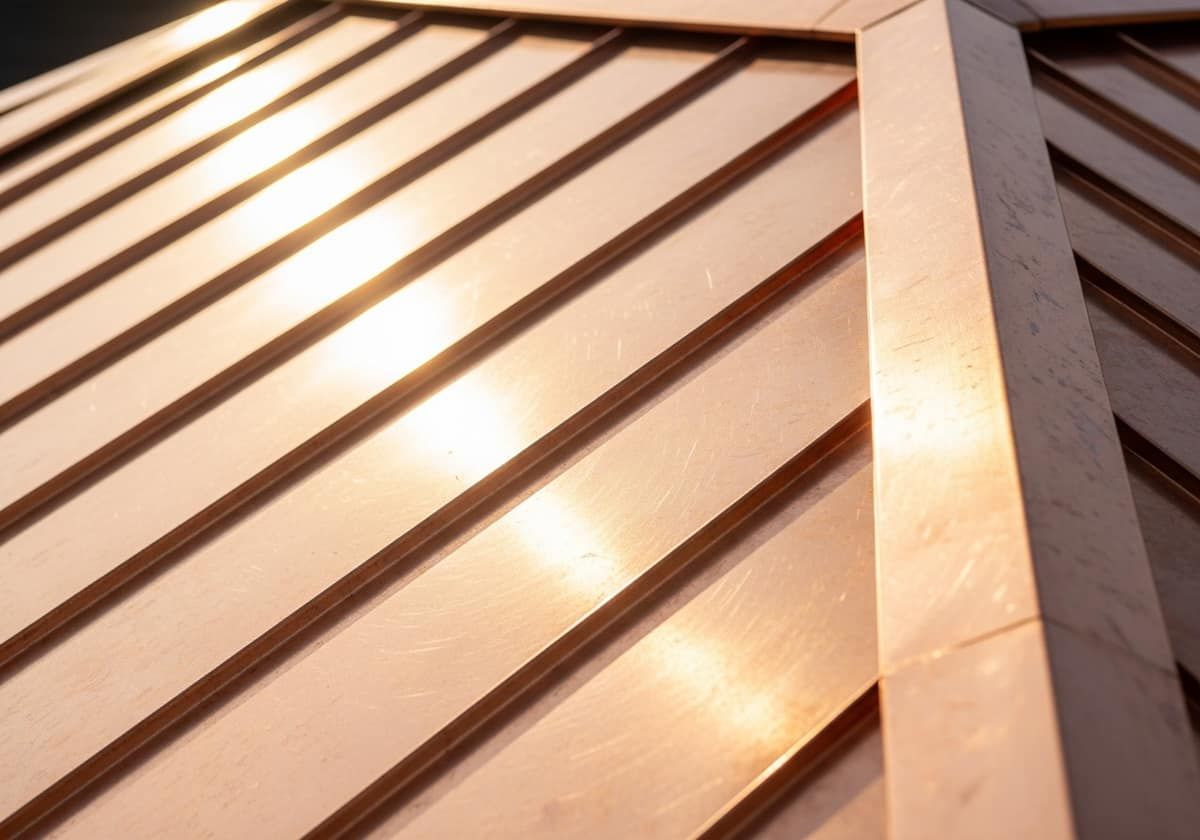
Why copper is the island standard
Copper roofing is the most enduring roof a home in Palm Beach County can wear. A copper roof is built from sheets of solid architectural copper — formed into standing-seam panels or flat-lock pans, then soldered or mechanically locked into a single watertight skin. There is no paint to chalk, no granules to wash off, no coating to fail. Instead the copper grows its own protective patina and simply gets better with age, which is why the barrier-island estates designed by Mizner, Fatio, and Wyeth still wear the copper roofs and bay roofs they were built with a century ago.
On the Town of Palm Beach, copper isn’t a luxury upgrade — it’s frequently the requirement. The Town’s Architectural Commission (ARCOM) and Landmarks Preservation Commission expect historic roofs replaced in kind, and the Landmark Manual specifically documents the copper bay, porch, and dormer roofs that define these houses. Asphalt is routinely denied. Down the coast — from Boca Raton and Delray Beach to Jupiter and Singer Island — the same salt air that eats ordinary metal is exactly the environment copper was made for.
This page explains what a copper roof actually is, how standing-seam and flat-seam systems differ, how the patina develops, and what copper costs versus the alternatives. We fabricate copper in our own shop and solder the seams on site, and we’re a licensed, insured Florida roofing contractor. When you’re ready for a real number, we measure the roof and put it in writing.
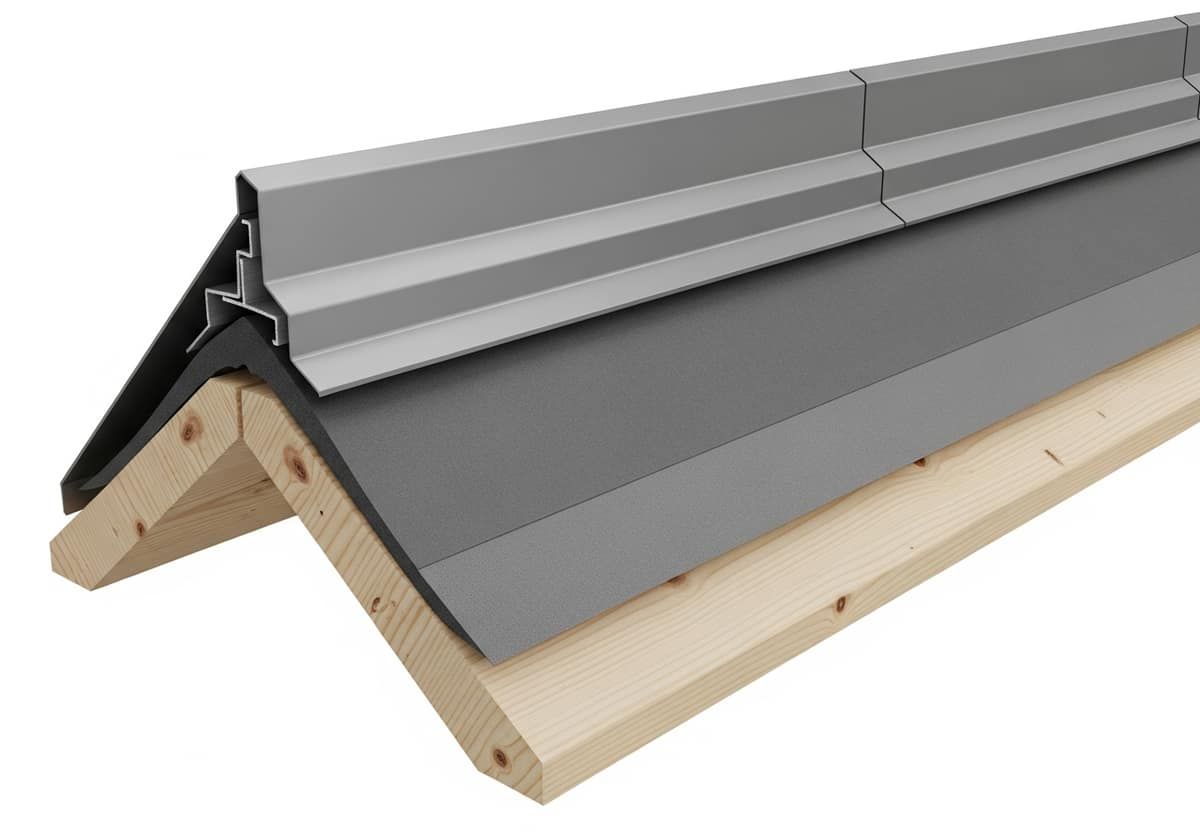
Solid metal, soldered seams — one continuous skin
A copper roof isn’t a coating on something cheaper. It’s solid architectural copper, formed and joined so the seam itself — not a bead of sealant — keeps the water out. Here’s what each part does.
Copper vs. the other premium roofs
We install clay tile and coated metal too — each has its place. But on the measures that matter for a Palm Beach County estate, copper sits at the top.
| What matters | Copper | Clay barrel tile | Coated standing-seam metal |
|---|---|---|---|
| Lifespan of the roof covering | ✓ 80+ years | 50+ yrs (underlayment sooner) | 40–70 years |
| Stands up to coastal salt air | ✓ Excellent — self-protecting | ✓ Good (tile); fasteners at risk | ✓ Good while the coating holds |
| Accepted in-kind by ARCOM & Landmarks | ✓ The island standard | ✓ On Mediterranean estates | — Case by case; rare on landmarks |
| Forms to bay, porch, turret & curves | ✓ Soldered flat-seam fits anything | — Limited on tight curves | — Hard on compound curves |
| Finish improves with age | ✓ Patinas — nothing to fail | — Color is fixed | ✗ Coating fades & chalks |
| Recyclable at end of life | ✓ 100% — real scrap value | — Crushed for fill | ✓ Yes |
| Up-front cost | Highest — premium craft | High | Moderate |
If copper is more than the project calls for, a coated standing-seam metal roof gives you many of the same lines for less, and clay tile stays true to a Mediterranean Revival home. We’ll tell you honestly which one your roof — and your review board — actually needs.
Copper is what the Town of Palm Beach asks for
On the barrier island, a re-roof is a design-review project before it’s a building permit. ARCOM and Landmarks expect historic roofs replaced in kind — and on the estates that means clay tile, slate, or copper. A roofer fluent in that review, and in copper craft, is who you want.
Standing-seam vs. flat-seam copper — and where each goes
Not all copper roofs are built the same way, and matching the system to the roof is half the craft. Standing-seam copper runs long vertical panels joined by raised seams that are double-locked or soldered. It sheds water fast, resists wind uplift, and gives a roof clean vertical lines, so it’s the natural choice for the main, steeper-sloped roof planes of a house — and a favorite on modern coastal builds from Jupiter to Boca Raton.
Flat-seam (flat-lock) copper is the older, more versatile craft: small copper pans soldered watertight on all four edges into a smooth, near-continuous surface. Because it can be worked over curves and low slopes that panels can’t follow, flat-seam copper is the go-to for the details that give the island its character — bay-window roofs, porch and entry roofs, dormers, eyebrows, and conical turrets. These are exactly the copper elements the Town of Palm Beach’s Landmark Manual documents, and restoring or replacing them in kind is core to what we do.
On many homes the right answer is both — standing-seam on the broad planes, flat-seam soldered copper on the bays and porches, with copper flashing, ridge, and valley details tying it together. We fabricate the panels, pans, cleats, and trim in our own shop to fit your roof, then solder the seams on site, so the finished roof reads as one piece of metal. Explore the custom work on our roof & metal fabrication page.
Restoring a historic copper roof, or specifying a new one? We’ll measure it, detail the copper, and handle the Town review.
Get a Free EstimateHow copper ages: the patina, and an 80-year roof
The single best thing about a copper roof is that it protects itself. Copper reacts slowly with the air to grow an oxide layer — the patina — that seals the metal beneath and stops the weathering from going deeper. That’s why copper lasts: there’s no finish to maintain, because the weathering is the finish. Here’s the progression you can expect:
- Bright copper (install day) — a warm salmon-rose shine. It lasts only weeks to a few months before the air starts to work on it.
- Russet to chocolate brown (the first years) — the first oxide layer darkens the roof to a deep, even brown. This is the tone most Palm Beach County estates settle into and stay for decades.
- Statuary brown to charcoal (a decade-plus) — the patina deepens further into the rich near-black “statuary” range prized on traditional architecture.
- Verdigris green (decades) — the iconic blue-green of old domes and steeples. Constant salt spray right on the water can bring it on faster; it is a stable, fully protective layer, not decay.
Because the patina is self-healing, a scratch or a new flashing simply re-oxidizes and blends back in — there is no paint to touch up. That same toughness is why copper, soldered correctly with copper and stainless fasteners, routinely lasts 80 years or more in our salt-and-sun climate while coated metals fade and asphalt is replaced two or three times over.
The figures behind a copper roof
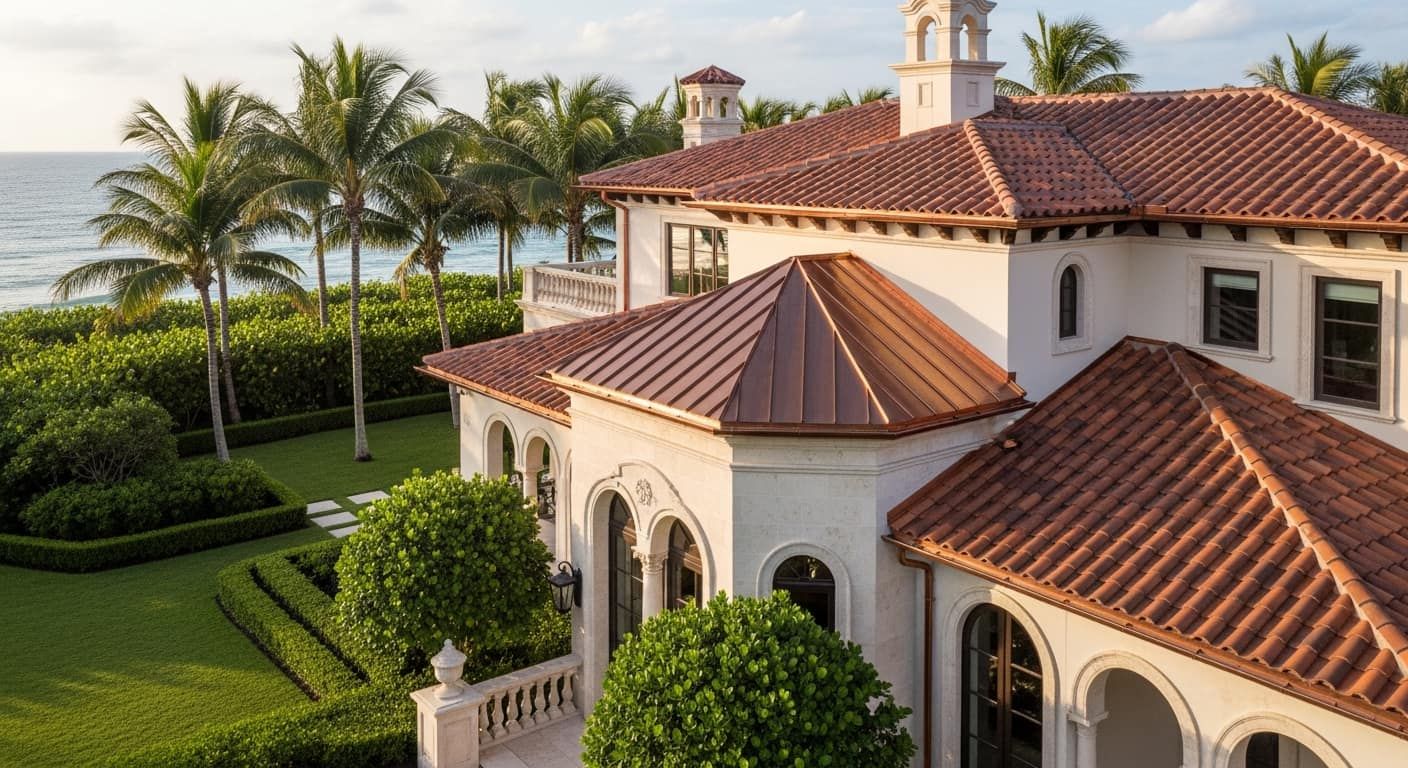
The roof a landmark estate deserves
From a single copper bay roof on a Midtown cottage to a full standing-seam and flat-seam re-roof on an oceanfront estate, we work in the in-kind copper the Town of Palm Beach expects — fabricated to match, soldered to last, and documented to be approved.
More than a roof: the copper craft
A copper roof is at its best when the rest of the rainwater system speaks the same language. We fabricate and install matching copper gutters — soldered half-round profiles, copper downspouts, and copper leader heads — so the whole envelope patinas together instead of a copper roof draining into mismatched aluminum. The same shop work produces the copper chimney caps, coping, dormer cheeks, valley liners, and through-wall flashing that make a roof watertight at every transition. It’s all on our roof & metal fabrication page.
Copper is a premium material and an old-world craft, so it sits at the top of the cost range — above clay tile, well above coated metal and asphalt. We never quote a copper roof over the phone, because the price turns on the metal weight, the roof’s complexity, and how much flat-seam detailing your bays, porches, and turrets need. Instead we measure the roof, scope the system, and give you a clear written number at your free estimate. If a copper budget is more than a project warrants, we’ll show you a coated standing-seam metal roof that keeps the lines for less.
We install and restore copper across all 11 communities we serve in Palm Beach County — and the Town of Palm Beach island is where we do our most demanding work. See how the architectural review works on the Palm Beach island roofing guide, or start your project with a free estimate.
Copper roofing FAQs
How long does a copper roof last?
What is the patina on a copper roof — and can I keep it bright?
Is copper roofing worth the cost?
Does copper work for bay-window, porch, and turret roofs?
Will a copper roof clear ARCOM and Landmarks on the island?
Can I get copper gutters to match my copper roof?
Copper roofing across Palm Beach County
- Palm Beach Copper roofing
- West Palm Beach Copper roofing
- Boca Raton Copper roofing
- Delray Beach Copper roofing
- Jupiter Copper roofing
- Palm Beach Gardens Copper roofing
- Wellington Copper roofing
- Boynton Beach Copper roofing
- Lake Worth Beach Copper roofing
- Royal Palm Beach Copper roofing
- Singer Island Copper roofing
Ready for a copper roof that outlasts the house?
Tell us about your roof and a local estimator will measure it, scope the standing- or flat-seam copper detailing, handle any ARCOM or Landmarks review, and leave you with a clear written number — no pressure, no call center.